Brown-Forman is behind some of the world’s most recognizable beverage brands, including Jack Daniel’s and Woodford Reserve. But outside of its headquarters in Louisville, Kentucky, candidates don’t always make the connection between those brands and the company behind them.

Hanna Buckner, Manager, Employer Brand and Digital Learning at Brown-Forman
That created an interesting challenge for Hanna Buckner, Manager, Employer Brand and Digital Learning, who was tasked with helping Brown-Forman formalize its employer brand strategy.
The result was “Belong to Better,” a global employer brand designed to connect Brown-Forman’s history and well-known consumer brands with the experience of working for the company. The strategy was developed with global flexibility in mind, giving teams a consistent framework they could adapt for different markets, roles and candidate audiences.
Hanna submitted two examples of this work to the 2026 Rally Awards: the “Belong to Better” employer brand video and the launch of the broader Recruitment Marketing strategy.
What makes the work especially relevant for Recruitment Marketers is how Hanna approached activation. As a team of one supporting a global organization, she couldn’t personally create every asset for every recruiter and market. Instead, she focused on giving teams the framework, templates and resources to activate the employer brand themselves.
I spoke with Hanna about building Brown-Forman’s first formalized employer brand strategy, launching it during a period of organizational change and creating a model that could work around the world.
Inside Brown-Forman’s Employer Brand Strategy
Lori: Before “Belong to Better,” what challenge were you trying to solve?
Hanna: People outside of the Louisville area probably don’t know who Brown-Forman is unless they’re in the industry. Brown-Forman has a fantastic name and reputation in Louisville, from being an employer to a corporate citizen and what it does for local communities through philanthropy. But outside of that, even my sister-in-law lives two hours north in Indianapolis and she thought it was a law firm.
We have Jack Daniel’s, Woodford Reserve, Old Forester and these fantastic beverage alcohol brands. People know those, but that’s not the exact company or direct brand they’re coming to work for. That’s the company and the brands they get to experience.
As we continue to grow outside the U.S., we had to think about how we translate what Brown-Forman means and what our brands mean.
We had this long-standing ambition of “Nothing Better in the Market.” Our founder, George Garvin Brown, signed it on the first bottles of Old Forester (and it’s still on bottles sold today). But when you tried to translate that into another language, whether it was Japanese, Italian, Polish or Spanish, it didn’t quite have the same meaning.
We wanted to take this global brand and localize it while still having a framework with flexibility.
Lori: Was this an existing employer brand that you inherited?
Hanna: This was the first formalized employer brand role at Brown-Forman. Employer brand might have sat with recruiting or some communications work before, but it was never really someone’s official job title or the majority of their role.
I was tasked with building out the white paper that went to leadership, then the framework, an RFP and identifying agencies that might be a good fit.
We wanted to formalize it, create something that could be localized and build a toolkit of assets that anyone in the organization could leverage to go and do it themselves.
Our recruiters are fantastic at what they do. They are the best brand ambassadors for the company at Brown-Forman, but we don’t expect them to be designers, artists or the perfect wordsmith. We want to give them the tools so they can do their main responsibility successfully and make it easy for them.
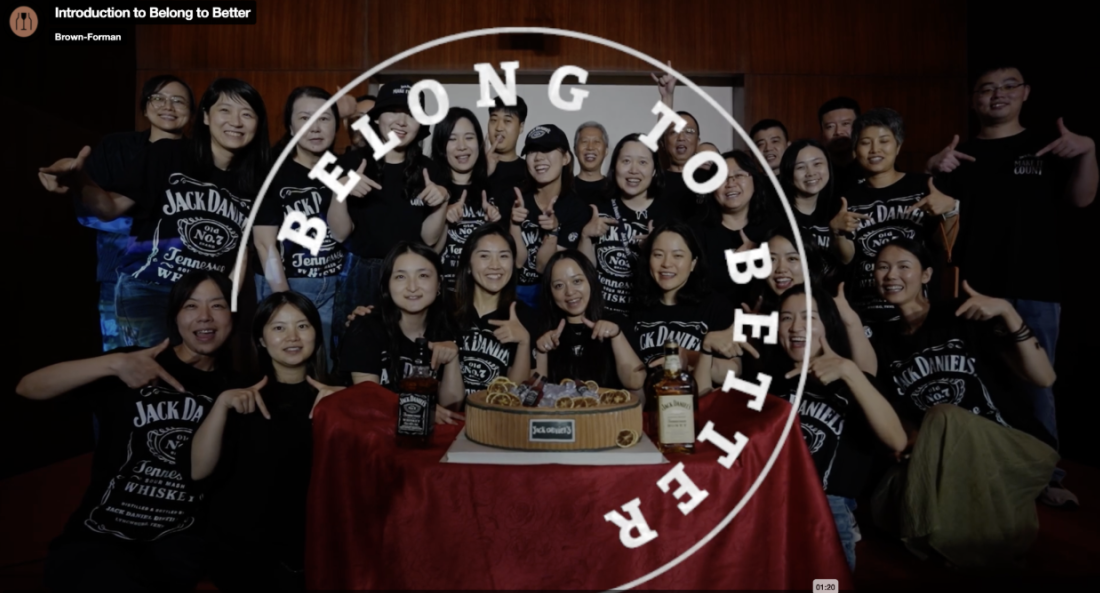
Brown-Forman’s “Belong to Better” employer brand creates a consistent global framework with the flexibility to localize across markets.
Lori: How did you make sure the employer brand could work globally without losing consistency?
Hanna: We use the phrase “flexibility in the framework.”
You’re never going to let Jack Daniel’s use pink. It’s iconically black and white. Here’s the Brown-Forman color palette and here are our resources. But then you can use the bottles or brands you have in your market, translate it to your local market and use what you need while it’s still consistently Brown-Forman.
That’s what we found in our agency relationship with Tonic. They had that global reach and were headquartered outside the U.S., which was really helpful so that we didn’t get too biased toward what we see in the U.S.
We also leveraged employees around the world to help us understand what something might mean and make sure that it would translate.
Lori: How does the 60/20/20 framework help recruiters adapt the employer brand for different candidates and roles?
Hanna: The 60/20/20 allows that flexibility within a framework.
Maybe a candidate talks about how important it is to work for global iconic brands. They can lean into that brand piece. Maybe they’re a marketer and that’s what they want to lean into.
Or maybe it’s someone right out of college who is looking for a role that’s going to teach them. They want learning and development, career growth and benefits that help them plan for the future.
Based on the candidate and the role, there’s that 60/20/20 framework. The materials we provide emphasize that, but recruiters can customize it for the candidate or the role and think about what needs to be leaned into a little more.
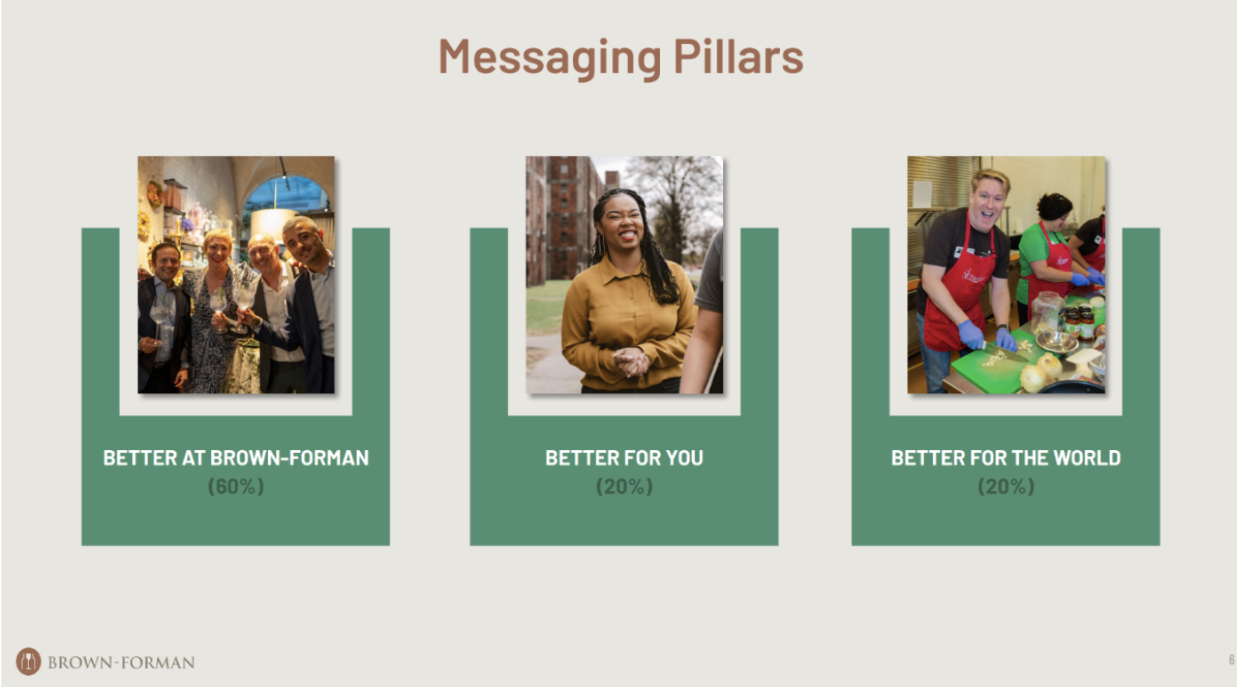
Brown-Forman’s 60/20/20 messaging framework gives recruiters a consistent foundation with the flexibility to emphasize what matters most to each candidate and role.
Lori: You were developing this work while Brown-Forman was going through organizational change. How did you make sure the employer brand remained authentic?
Hanna: We kept trying to time the employer brand rollout so it didn’t have that impact. It was really important to us that we didn’t roll it out right as we announced new operational hubs because we knew employee sentiment might not align with that.
We didn’t want to roll out this big employer brand and celebrate it when that wasn’t authentic to the instability that some employees were feeling.
You need to know your organization and have your pulse on it. Is this going to land well? Or do we need to find a way not to do that yet?
That’s why we did the soft launch with our People and Communications organization to start having them embed it into the programs and tools they use and have it be a slow drip.
Lori: As a team of one, how did you give teams the ability to use the employer brand themselves without losing quality or consistency?
Hanna: Internally, we leverage Infogram. It’s similar to Canva. We created templates and toolkits that were pre-populated. We provided photos and examples, but at the same time created placeholders so people could fill them in.
We rolled that out to the People and Communications organization and created templates for them. I also sit in with the recruiting team once a month just to hear what’s going well and what they still need.
Through one of those sessions, I learned that they needed a PowerPoint template deck where they could pull things from for higher-level roles where they might have to do something a little different.
When I’m teaching them to fish, I still have to provide the materials. I still need to be there. I can’t set it and forget it like a crock pot.
I can start it, but I also have to think about what needs to evolve and change.
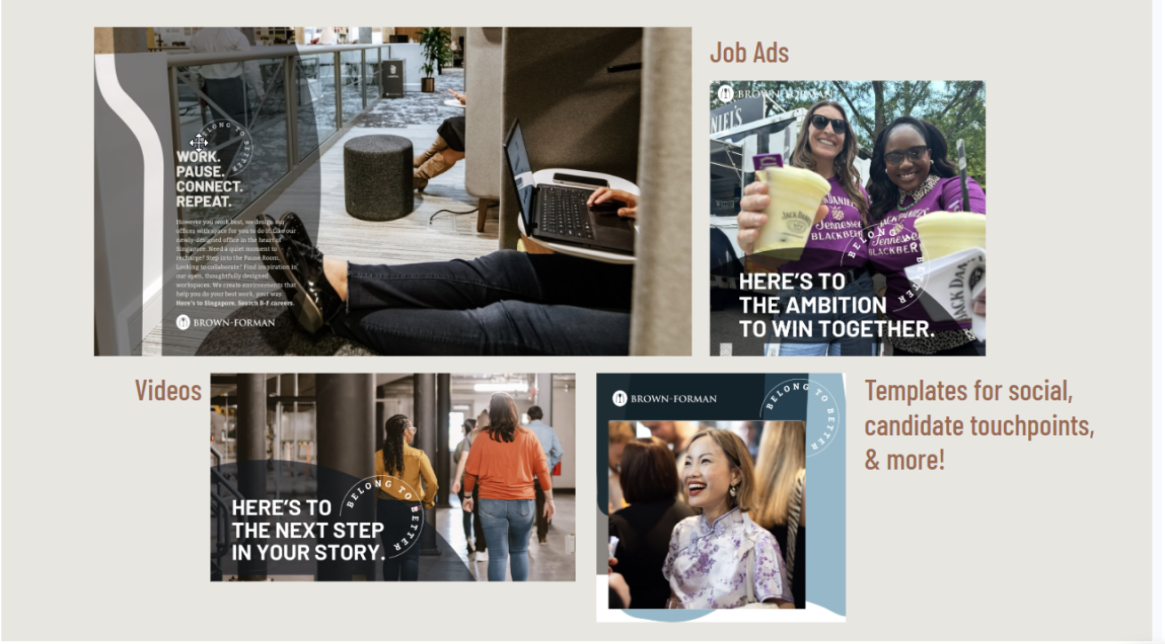
Brown-Forman’s templates and toolkits helped teams activate the employer brand across job ads, videos, social content and candidate touch points.
According to Brown-Forman’s Rally Awards submission, the self-service approach enabled a 100% global rollout without additional headcount, with 10 recruiters upskilled within 60 days. The strategy reached major global markets including India, Poland, Mexico and the United States, while more than 10 employee touch points were rebranded across more than 20 countries.
Lori: What did participating in the Rally Awards give you as a Recruitment Marketing practitioner?
Hanna: We don’t typically enter our work in external opportunities very often. We’re pretty humble, and I think we’re hesitant around that because we’re trying to balance showing the work with the authenticity of it.
My only wish was that I had done it sooner.
We talk about feedback being a gift at Brown-Forman, so I’m grateful for the gift of the feedback because this was the first time we had really formalized our employer brand strategy.
It was so nice to put it together and reflect on the work. It timed well with the end of our fiscal year, so it was a good opportunity to pause and reflect on what we’d done and also think about where we can go.
Creating Flexibility Within a Global Employer Brand
Thank you Hanna for sharing your experience with the Rally community! It shows us that building a global employer brand requires more than creating a central set of messaging and assets. Teams also need a practical way to use them.
For Brown-Forman, that meant creating a framework that protects the consistency of “Belong to Better” while giving recruiters and teams enough flexibility to adapt it for different markets, candidates and roles.
That approach is especially important when you’re operating as a small team. Her “teach them to fish” philosophy didn’t mean handing over a toolkit and walking away. As she put it, “I can’t set it and forget it like a crock pot.” The framework may be scalable, but maintaining a strong employer brand still requires listening, supporting teams and allowing the work to evolve.
Learn More About the Rally Awards
Have Recruitment Marketing or Employer Brand work you’re proud of? Learn more about the Rally Awards and get ready for the 2027 program.